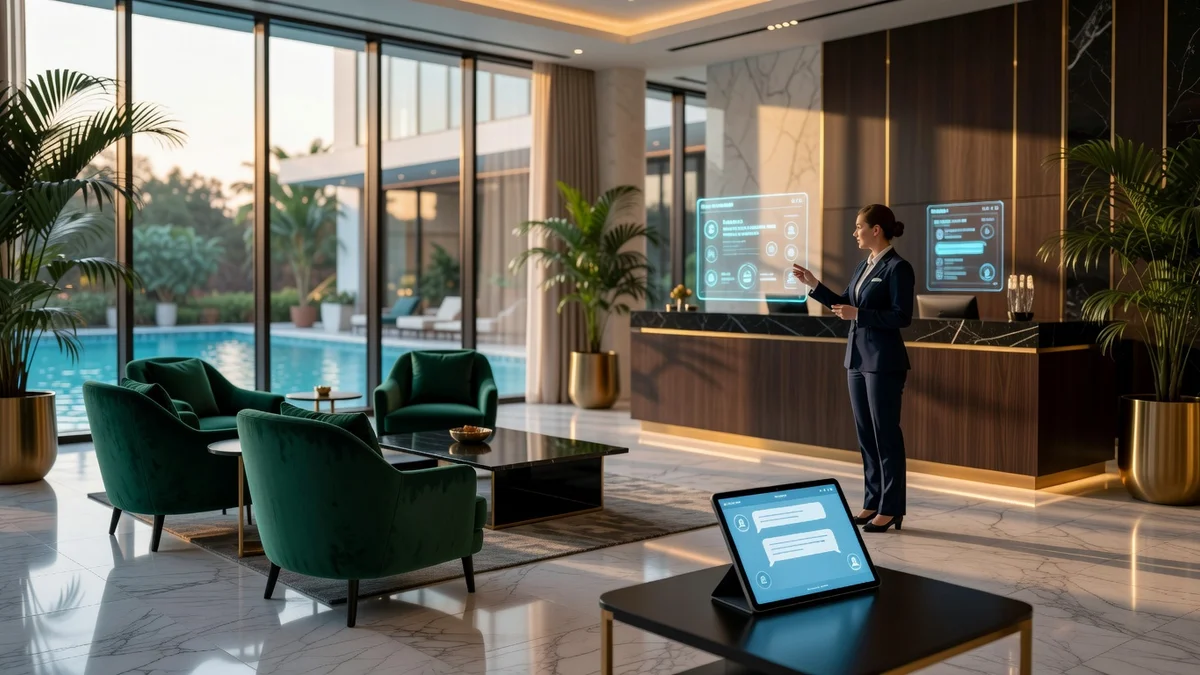
The Growing Role of Chatbots in Hospitality and Guest Communication
Imagine a world where your hotel guests can get instant answers to their questions at 2 a.m., book a spa session without waiting on hold, or even request extra towels—all without a single staff member lifting a finger. Sounds like science fiction? It’s not. This is the reality powered by chatbots, and they’re revolutionizing the hospitality industry. As a hotel manager or campsite owner, you’re likely juggling endless tasks, from managing reservations to ensuring guest satisfaction. But what if technology could handle the repetitive queries, freeing you up for what really matters? In this post, we’ll explore the role of chatbots in hospitality, diving into how they’re enhancing guest communication, boosting efficiency, and driving revenue. Whether you’re running a bustling resort or a cozy vacation rental, understanding this trend could be a game-changer for your business.

What Are Chatbots and How Do They Fit Into Hospitality?
At their core, chatbots are AI-powered software programs designed to simulate human conversation. They can be integrated into websites, messaging apps like WhatsApp or Facebook Messenger, or even voice assistants like Alexa. In the hospitality sector, chatbots handle everything from pre-arrival inquiries to post-stay feedback, making them invaluable for seamless guest interactions.
The role of chatbots in hospitality has grown exponentially, especially post-pandemic, as contactless services became a priority. According to a report by Grand View Research, the global chatbot market is projected to reach $9.4 billion by 2024, with hospitality being one of the fastest-growing segments. For instance, a campsite owner might use a chatbot to answer questions about tent setups or nearby hiking trails, while a resort could deploy one for personalized room service recommendations.
Types of Chatbots Used in Hospitality
Not all chatbots are created equal. Here’s a breakdown of the most common types you’ll encounter:
-
Rule-Based Chatbots: These follow predefined scripts and are great for simple tasks like checking availability or providing directions. They’re cost-effective for small operations like vacation rentals.
-
AI-Powered Chatbots: Using machine learning, these learn from interactions and handle complex queries, such as customizing travel itineraries based on guest preferences.
-
Hybrid Chatbots: A mix of both, escalating to human agents when needed. This is ideal for hotels where personalized service is key.
Actionable advice: Start by assessing your needs. If you’re a hotel manager dealing with high-volume inquiries, opt for an AI-powered solution. Test it on your website first to gauge guest response before full integration.
Key Benefits of Chatbots for Guest Communication
The role of chatbots in hospitality isn’t just about automation—it’s about elevating the guest experience. Let’s look at some tangible benefits backed by data and real-world examples.
24/7 Availability and Instant Responses
Guests don’t stick to business hours. A study by Drift found that 64% of consumers expect real-time responses, yet only 12% of businesses provide them. Chatbots bridge this gap, offering round-the-clock support. For example, a resort in Bali implemented a chatbot that handled 70% of nighttime queries, reducing staff overtime by 40%.
- Actionable Tip: Integrate your chatbot with your property management system (PMS) to pull real-time data on room availability or event schedules.
Personalized Guest Experiences
Chatbots can analyze past interactions to offer tailored suggestions. Imagine a guest at your campsite asking about family-friendly activities—the chatbot could recommend a nearby picnic spot based on their group size and preferences.
Statistics show that personalized experiences can increase guest loyalty by up to 20%, according to McKinsey. In practice, Hilton’s chatbot, Connie, uses IBM Watson to provide hyper-personalized recommendations, leading to higher satisfaction scores.
Cost Savings and Operational Efficiency
Running a hospitality business is expensive, but chatbots can cut costs significantly. Gartner estimates that by 2023, chatbots will save businesses $11 billion in customer service expenses. For campsite owners, this means reallocating staff from answering emails to on-site maintenance.
- Reduced Response Time: From minutes to seconds.
- Scalability: Handle peak season rushes without hiring extras.
- Error Reduction: Consistent information delivery minimizes human mistakes.
Practical example: A mid-sized hotel chain reported saving $50,000 annually by using chatbots for booking confirmations and FAQs, freeing front-desk staff for more complex tasks.
“Chatbots aren’t replacing humans; they’re empowering them to focus on high-value interactions.” – Hospitality Tech Expert
Real-World Examples of Chatbots in Action
To make this concrete, let’s explore how different hospitality professionals are leveraging chatbots.
Hotels: Streamlining Reservations and Check-Ins
Marriott’s chatbot on Facebook Messenger allows guests to book rooms, check in, and even request late checkouts. This has resulted in a 30% increase in direct bookings, bypassing third-party sites and their commissions.
For hotel managers, here’s how to implement something similar:
- Choose a platform like Messenger or your hotel app.
- Train the chatbot on common queries using your FAQ database.
- Monitor analytics to refine responses over time.
Campsites and Resorts: Enhancing Outdoor Experiences
Campsite owners face unique challenges, like weather-dependent queries. A chatbot integrated with weather APIs can provide instant updates, such as “Rain expected tonight—would you like tips on waterproofing your tent?”
At a popular U.S. national park resort, chatbots handled 85% of guest communications during peak summer, leading to a 15% uptick in positive reviews on sites like TripAdvisor.
Vacation Rentals: Building Trust Through Communication
For vacation rental hosts, chatbots can automate welcome messages, keyless entry instructions, and local recommendations. Airbnb hosts using similar tools report faster response rates, which correlate with higher ratings.
Actionable advice: Use bullet points in chatbot responses for clarity, like:
- Local eateries: Try Joe’s Diner for breakfast.
- Nearby attractions: 5-minute walk to the beach.
- Emergency contacts: Call 911 or our 24/7 line.

Challenges and How to Overcome Them
While the role of chatbots in hospitality is promising, it’s not without hurdles. Common issues include:
- Misunderstandings: Guests might use slang or complex language that confuses basic bots.
- Privacy Concerns: Handling personal data requires compliance with GDPR or CCPA.
- Integration Issues: Syncing with existing systems can be tricky.
To overcome these:
- Invest in natural language processing (NLP) for better understanding.
- Clearly state data usage policies in chatbot interactions.
- Partner with experts for seamless integration—more on that later.
A survey by Oracle Hospitality revealed that 78% of guests are comfortable with chatbots if they provide accurate info, so focus on reliability.
Future Trends: What’s Next for Chatbots in Hospitality?
Looking ahead, the role of chatbots in hospitality will evolve with advancements like voice-activated bots and augmented reality integrations. By 2025, Juniper Research predicts chatbots will facilitate $112 billion in retail sales, with hospitality capturing a significant share.
Emerging trends include:
- Multilingual Support: Catering to international guests with real-time translation.
- Predictive Analytics: Anticipating needs, like suggesting umbrellas before rain.
- Sustainability Focus: Chatbots recommending eco-friendly options for green-conscious travelers.
For campsite owners, this could mean bots that integrate with IoT devices for smart tent lighting or automated check-ins.
Implementing Chatbots: A Step-by-Step Guide for Hospitality Professionals
Ready to dive in? Here’s a practical, step-by-step guide to get started:
-
Assess Your Needs: Identify pain points, like high inquiry volumes during check-in rushes.
-
Choose the Right Tool: Options range from free builders like Chatfuel to advanced platforms integrated with AI.
-
Customize and Train: Input your property’s specifics—menus, policies, and FAQs.
-
Test Thoroughly: Run beta tests with staff and select guests.
-
Launch and Monitor: Track metrics like response time and satisfaction scores, adjusting as needed.
-
Scale Up: Expand to multiple channels once proven effective.
Budget-wise, small setups start at $50/month, scaling to $500+ for enterprise solutions. Remember, ROI often comes quickly through increased bookings and efficiency.

Conclusion: Embrace the Chatbot Revolution for Better Guest Experiences
The role of chatbots in hospitality is no longer a novelty—it’s a necessity for staying competitive in a digital-first world. From providing instant, personalized communication to cutting costs and enhancing efficiency, chatbots are transforming how hotel managers, campsite owners, and resort operators connect with guests. By adopting this technology, you can not only meet but exceed guest expectations, leading to glowing reviews and repeat business.
If you’re ready to explore how chatbots can elevate your operations, consider partnering with experts in AI automation. At Jengu (jengu.ai), we specialize in tailored solutions for the hospitality industry, helping you implement seamless chatbots that integrate with your existing systems. Reach out today to discover how we can automate your guest communication and drive real results for your business.