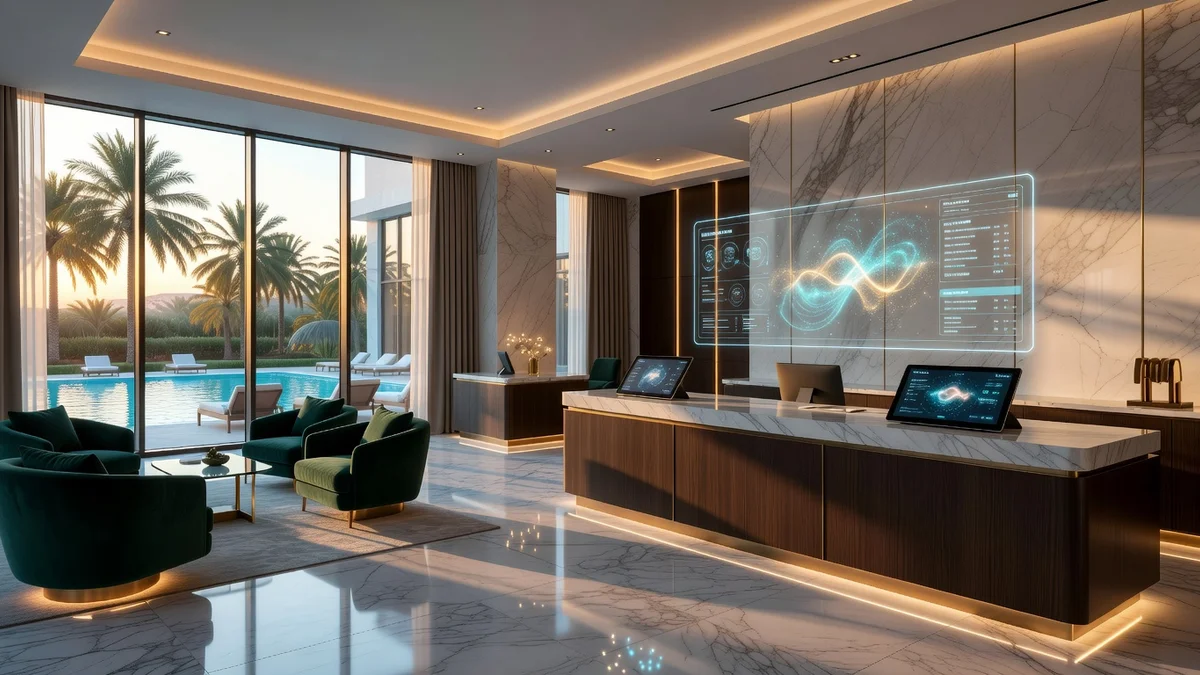
Introduction: Revolutionizing Hospitality with AI
Imagine a hotel front desk where check-ins happen in seconds, guest queries are answered instantly, and staff can focus on creating memorable experiences rather than juggling paperwork. This isn’t a futuristic dream—it’s the reality of AI front desk hotel technology. As the hospitality industry faces staffing shortages and rising guest expectations, AI is stepping in to transform reception operations. In this post, we’ll explore how AI is reshaping hotel receptions, from streamlining check-ins to enhancing personalization. Whether you’re a hotel manager, campsite owner, or resort operator, you’ll discover practical insights and actionable steps to integrate AI into your operations. Let’s dive in.

What is AI Front Desk Technology in Hotels?
At its core, AI front desk hotel systems use artificial intelligence to automate and enhance traditional reception tasks. These aren’t just chatbots; they’re sophisticated platforms that integrate machine learning, natural language processing, and data analytics to handle everything from reservations to guest interactions.
Think of AI as a virtual concierge that never sleeps. For instance, tools like virtual assistants can manage check-ins via kiosks or mobile apps, while predictive analytics forecast busy periods to optimize staffing. According to a 2023 report by Hospitality Technology, 45% of hotels have already adopted some form of AI at the front desk, with adoption rates expected to reach 70% by 2025. This shift is driven by the need for efficiency—hotels report up to 25% reductions in operational costs after implementation.
But what sets AI front desk hotel solutions apart? They learn from data. Over time, these systems analyze guest preferences, past behaviors, and feedback to provide tailored services. For campsite owners, this could mean automated site allocations based on group size or weather forecasts, while resort managers might use AI to upsell spa treatments during check-in.
Key Benefits of AI for Hotel Reception Operations
Implementing AI at the front desk isn’t just about cutting costs—it’s about elevating the entire guest experience. Here are some standout benefits:
-
Improved Efficiency and Speed: Traditional check-ins can take 5-10 minutes per guest, but AI-powered kiosks reduce this to under a minute. A study from McKinsey estimates that AI can automate 40% of front desk tasks, freeing staff for high-touch interactions.
-
Enhanced Personalization: AI analyzes data to offer customized recommendations. For example, if a guest frequently books ocean-view rooms, the system can prioritize those options automatically.
-
24/7 Availability: Guests arriving late at night or during off-hours get instant support via chatbots or voice assistants, reducing frustration and no-shows.
-
Cost Savings: By minimizing errors in bookings and reducing the need for round-the-clock staffing, hotels can save up to 20% on labor costs, per Deloitte insights.
For hospitality professionals, these benefits translate to higher guest satisfaction scores. Resorts using AI report a 15% increase in positive reviews, as guests appreciate the seamless, tech-savvy service.
“AI isn’t replacing human hospitality; it’s amplifying it, allowing staff to focus on what they do best—building connections.” – Hospitality Industry Expert
How AI Transforms Specific Front Desk Operations
Let’s break down how AI front desk hotel technology impacts day-to-day tasks with practical examples.
Streamlining Check-In and Check-Out Processes
Gone are the days of long lines and manual paperwork. AI kiosks equipped with facial recognition can verify identities in seconds, while mobile apps allow pre-check-in. At a busy urban hotel, this means handling peak-hour rushes without extra staff.
Actionable advice: Start small by integrating a self-service kiosk. Train your team on troubleshooting, and use data analytics to monitor usage—aim for 50% of check-ins via AI within the first quarter.
Enhancing Guest Communication and Support
AI chatbots handle common queries like room service requests or local recommendations. For campsites, an AI system could provide real-time updates on trail conditions or wildlife alerts.
Example: A resort in Hawaii uses AI to send personalized welcome messages via SMS, including activity suggestions based on weather data. This led to a 30% uptick in on-site bookings.
- Pro Tip: Customize your AI with your property’s unique voice—make it friendly and informative to build trust.
Predictive Analytics for Better Resource Management
AI forecasts demand patterns, helping managers allocate staff efficiently. If data shows a surge in weekend check-ins, the system can alert you to roster more personnel.
Statistics show that hotels using predictive AI reduce overstaffing by 18%, according to Statista. For vacation rental owners, this means optimizing cleaning schedules based on turnover predictions.
Security and Fraud Prevention
AI monitors for suspicious activities, like unusual booking patterns, to prevent fraud. In one case, a hotel chain detected and blocked 95% of fake reservations using AI algorithms.
Actionable steps:
- Integrate AI with your existing PMS (Property Management System).
- Regularly update the system with new data to improve accuracy.
- Conduct staff training sessions quarterly to handle AI-assisted security alerts.

Real-World Examples and Case Studies
Seeing AI in action makes its potential clear. Take Marriott’s use of AI front desk tools: Their virtual assistants handle over 1 million guest interactions annually, resulting in a 25% faster response time and higher Net Promoter Scores.
For smaller operations, like a family-run campsite, AI from providers like Jengu has automated reservation confirmations and personalized itineraries. One campsite owner reported a 40% increase in repeat bookings after implementing AI-driven email follow-ups.
In resorts, Hilton’s Connie robot (powered by IBM Watson) acts as a concierge, providing directions and trivia. This not only delights guests but also collects data for continuous improvement.
These examples highlight that AI front desk hotel solutions scale to any size— from boutique hotels to large chains.
Actionable Advice for Implementing AI in Your Hotel
Ready to bring AI to your front desk? Here’s a step-by-step guide tailored for hospitality pros:
-
Assess Your Needs: Audit current operations. Identify pain points like slow check-ins or frequent guest complaints.
-
Choose the Right Tools: Look for user-friendly platforms that integrate with your existing systems. Focus on scalability—start with chatbots before adding kiosks.
-
Pilot and Test: Roll out in phases. For instance, test AI check-ins during low season to gather feedback.
-
Train Your Team: Ensure staff understands AI as a tool, not a threat. Offer workshops on data privacy and AI ethics.
-
Measure Success: Track metrics like check-in time, guest satisfaction, and ROI. Aim for a 20% efficiency boost in the first six months.
- Budget Tip: Entry-level AI solutions cost $500-$2,000 monthly, with quick returns through labor savings.
Common challenges include integration hurdles or guest resistance to tech. Overcome them by offering hybrid options—AI for speed, human staff for complex needs.
Overcoming Challenges in AI Adoption
While exciting, adopting AI front desk hotel tech isn’t without hurdles. Data privacy concerns top the list, with 60% of guests wary of sharing information (per a PwC survey). Solution: Use GDPR-compliant systems and transparently communicate data usage.
Another issue is the initial setup cost, but realistic estimates show a payback period of 6-12 months through efficiency gains. For campsite owners in remote areas, connectivity can be a barrier—opt for offline-capable AI hybrids.
By addressing these proactively, you ensure a smooth transition that benefits both your team and guests.

Conclusion: Embrace the Future of Hotel Receptions
AI is no longer optional—it’s essential for staying competitive in hospitality. From faster check-ins to personalized service, AI front desk hotel technology is transforming receptions into efficient, guest-centric hubs. By implementing these tools, you’ll not only boost operations but also create unforgettable experiences that drive loyalty and revenue.
If you’re ready to explore how AI can elevate your property, consider Jengu’s tailored automation solutions for hotels, campsites, and resorts. Visit jengu.ai to learn more and schedule a demo—let’s make your front desk smarter today.