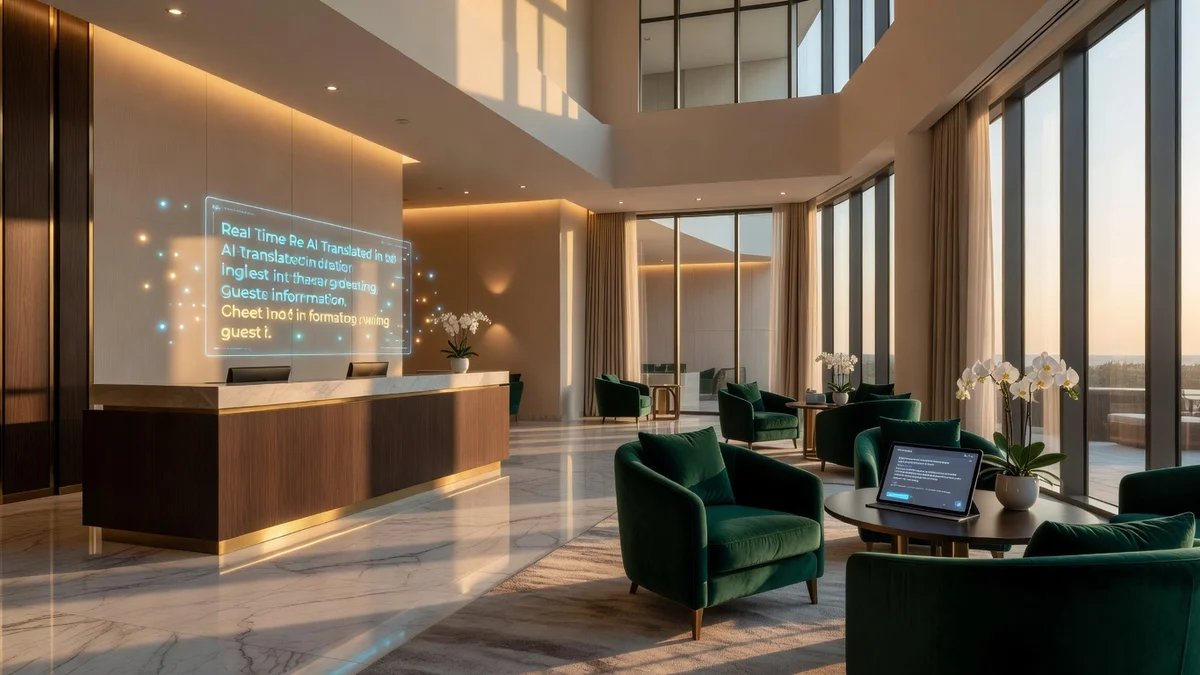
Breaking Language Barriers: The Rise of AI Translation in Hospitality
Imagine welcoming a group of excited tourists from Japan to your bustling hotel lobby, only to realize that your front desk staff can’t understand a word they’re saying. Frustration builds, check-in drags on, and what should be a warm welcome turns into an awkward standoff. In today’s globalized world, where international travel is booming, language barriers can make or break a guest’s experience. But what if technology could bridge that gap instantly? Enter AI translation hospitality tools—game-changers that are revolutionizing how hotels, campsites, and resorts communicate with guests from around the world.
As a hospitality professional, you know that seamless communication isn’t just nice to have; it’s essential for guest satisfaction and repeat business. According to a recent report by Statista, international tourist arrivals are projected to reach 1.8 billion by 2030, up from 1.5 billion in 2019. With such diversity, embracing AI translation hospitality solutions can help you stay ahead. In this post, we’ll explore how these tools work, their benefits, practical implementation tips, and real-world examples to help you enhance your operations.

Understanding Language Barriers in the Hospitality Industry
Language differences have long been a thorn in the side of hospitality businesses. Whether you’re managing a luxury resort, a cozy campsite, or a vacation rental, miscommunications can lead to everything from simple booking errors to serious safety issues.
The Impact on Guest Experience
Consider this: A survey by the American Hotel & Lodging Association found that 45% of international travelers cite language barriers as a top frustration during stays. This isn’t just about chit-chat; it affects check-ins, room service requests, and even emergency communications. For campsite owners, explaining trail rules or weather alerts to non-English speakers can be challenging, potentially leading to dissatisfaction or accidents.
In hotels, front-line staff often juggle multiple languages, but human limitations mean they’re not always equipped. Resorts catering to global clientele, like those in popular destinations such as Bali or the French Riviera, see this issue amplified. The result? Lower review scores on platforms like TripAdvisor, where guests frequently mention communication woes.
Why Traditional Solutions Fall Short
Before AI, hospitality relied on multilingual staff, printed translation cards, or basic apps like Google Translate. While helpful, these methods have drawbacks:
- Hiring multilingual employees is costly and not always feasible, especially for smaller campsites or seasonal resorts.
- Manual translations are slow and prone to errors, particularly with dialects or slang.
- Basic apps lack context, often leading to hilarious—or disastrous—misinterpretations, like translating “I’m full” (meaning satiated) as something entirely different.
This is where AI translation hospitality steps in, offering real-time, accurate solutions powered by machine learning.
How AI Translation Tools Work in Hospitality Settings
AI translation tools use advanced algorithms to convert speech or text from one language to another almost instantaneously. Unlike older systems, modern AI incorporates natural language processing (NLP) to understand context, tone, and nuances.
Key Technologies Behind AI Translation
At the core, these tools leverage:
- Neural Machine Translation (NMT): This mimics human brain patterns for more fluid translations, achieving up to 95% accuracy in common languages, per Google’s research.
- Speech Recognition and Synthesis: Tools like those integrated into hotel chatbots can listen to a guest’s query in Mandarin and respond in English—or vice versa.
- Integration with Hospitality Systems: Many AI solutions plug into property management software (PMS), allowing seamless translation of emails, booking confirmations, and in-room devices.
For example, imagine a vacation rental owner using an AI-powered app to translate guest inquiries via WhatsApp. The tool not only translates but also suggests culturally appropriate responses.
Popular AI Translation Tools for Hospitality
Hospitality pros have several options:
- Google Translate API: Integrates with apps for real-time chat.
- Microsoft Translator: Offers offline capabilities, ideal for remote campsites.
- Specialized Platforms: Tools like those from Jengu.ai provide tailored AI translation hospitality features, such as voice-activated kiosks for check-ins.
Statistics show adoption is growing: A Hospitality Net report estimates that 60% of hotels will implement AI translation by 2025, driven by a 20% increase in international bookings post-pandemic.

Benefits of Implementing AI Translation in Your Business
Adopting AI translation hospitality isn’t just about fixing problems—it’s about unlocking opportunities. Let’s break down the advantages.
Enhanced Guest Satisfaction and Loyalty
When guests feel understood, they’re happier. A study by Cornell University’s School of Hotel Administration revealed that properties using AI translation saw a 15% boost in guest satisfaction scores. For resorts, this means better reviews and higher occupancy rates. Campsite owners can use translated apps to provide multilingual trail maps, turning a basic stay into a memorable adventure.
Operational Efficiency and Cost Savings
AI reduces the need for on-site interpreters, cutting costs by up to 30%, according to Deloitte’s hospitality insights. Staff can focus on service rather than language hurdles. In high-volume hotels, automated translation in chatbots handles routine queries, freeing up time for personalized interactions.
Competitive Edge in Global Markets
With tourism rebounding, standing out matters. Properties offering seamless AI translation hospitality attract more international guests. For instance, a European resort chain reported a 25% increase in Asian bookings after deploying AI tools.
“AI isn’t replacing human touch—it’s enhancing it, allowing staff to connect on a deeper level.” – Hospitality Tech Expert
Practical Examples of AI Translation in Action
Let’s get actionable with real-world scenarios tailored to hospitality professionals.
Hotel Check-In Scenarios
Picture a busy front desk: A French family arrives late at night. Using an AI kiosk, they scan a QR code, speak their needs in French, and receive instant English translations for staff. The system even translates room preferences, like “vue sur la mer” to “ocean view.”
Actionable Tip: Integrate AI into your PMS. Start small—pilot a tablet-based translator for check-ins.
Campsite and Resort Communications
For campsite owners, weather alerts are crucial. An AI app can broadcast translated warnings via SMS in multiple languages. Resorts might use voice-enabled devices in rooms, where guests say “room service” in Spanish, and the system routes the request accurately.
Example: A U.S. national park campsite implemented AI translation for guided tours, resulting in a 40% uptick in international visitor participation.
Vacation Rental Guest Interactions
Owners of Airbnbs or vacation homes can embed AI chatbots on their websites. A guest from Brazil messages about amenities in Portuguese; the bot translates and responds, even suggesting local tips.
Numbered List: Steps to Implement AI Translation in Rentals
- Choose a user-friendly tool like Jengu.ai’s integration.
- Train staff on basic usage—focus on overrides for complex queries.
- Test with mock scenarios to ensure accuracy.
- Gather feedback via post-stay surveys to refine.
Overcoming Challenges with AI Translation Tools
No solution is perfect. Common hurdles include:
- Accuracy in Niche Dialects: AI might struggle with regional accents, but ongoing updates improve this.
- Privacy Concerns: Ensure tools comply with GDPR or similar regulations.
- Integration Issues: For older systems, start with standalone apps.
Solutions: Opt for customizable platforms and provide staff training. Realistic estimate: Initial setup might cost $500–$2,000, with ROI in months through improved efficiency.

Actionable Advice for Hospitality Professionals
Ready to dive in? Here’s how to get started with AI translation hospitality:
- Assess Your Needs: Audit your guest demographics. If 30% are non-English speakers, prioritize high-traffic areas like reception.
- Select the Right Tool: Look for scalability. For hotels, choose enterprise-level; for campsites, go mobile-first.
- Train and Test: Roll out in phases. Use bullet points for quick staff guides:
- Demonstrate tool basics in team meetings.
- Role-play common scenarios.
- Monitor usage and adjust.
- Measure Success: Track metrics like response times (aim for under 10 seconds) and Net Promoter Scores.
By following these steps, you’ll not only break language barriers but also foster inclusive environments.
Conclusion: Embrace AI for a Borderless Hospitality Experience
In an era where travel knows no bounds, AI translation hospitality is more than a tool—it’s a necessity for thriving in the competitive landscape. From boosting guest satisfaction to streamlining operations, these technologies empower you to welcome the world with open arms. As international tourism surges, don’t get left behind.
If you’re a hotel manager, campsite owner, or resort operator looking to integrate cutting-edge AI solutions, consider Jengu.ai. Our specialized automation tools, including advanced AI translation features, are designed to elevate your hospitality business. Contact us today to learn how we can tailor a solution for you—let’s make every guest feel at home, no matter their language.
(Word count: 1527)